
Is Strength Training Safe After Knee Surgery?
Short answer: Yes. Strength training is not just safe after knee surgery — it is essential for full recovery. Once your surgeon and physiotherapist have cleared you for loaded exercise, structured strength training rebuilds the muscle, tendon, and joint capacity needed to return to normal life and sport.
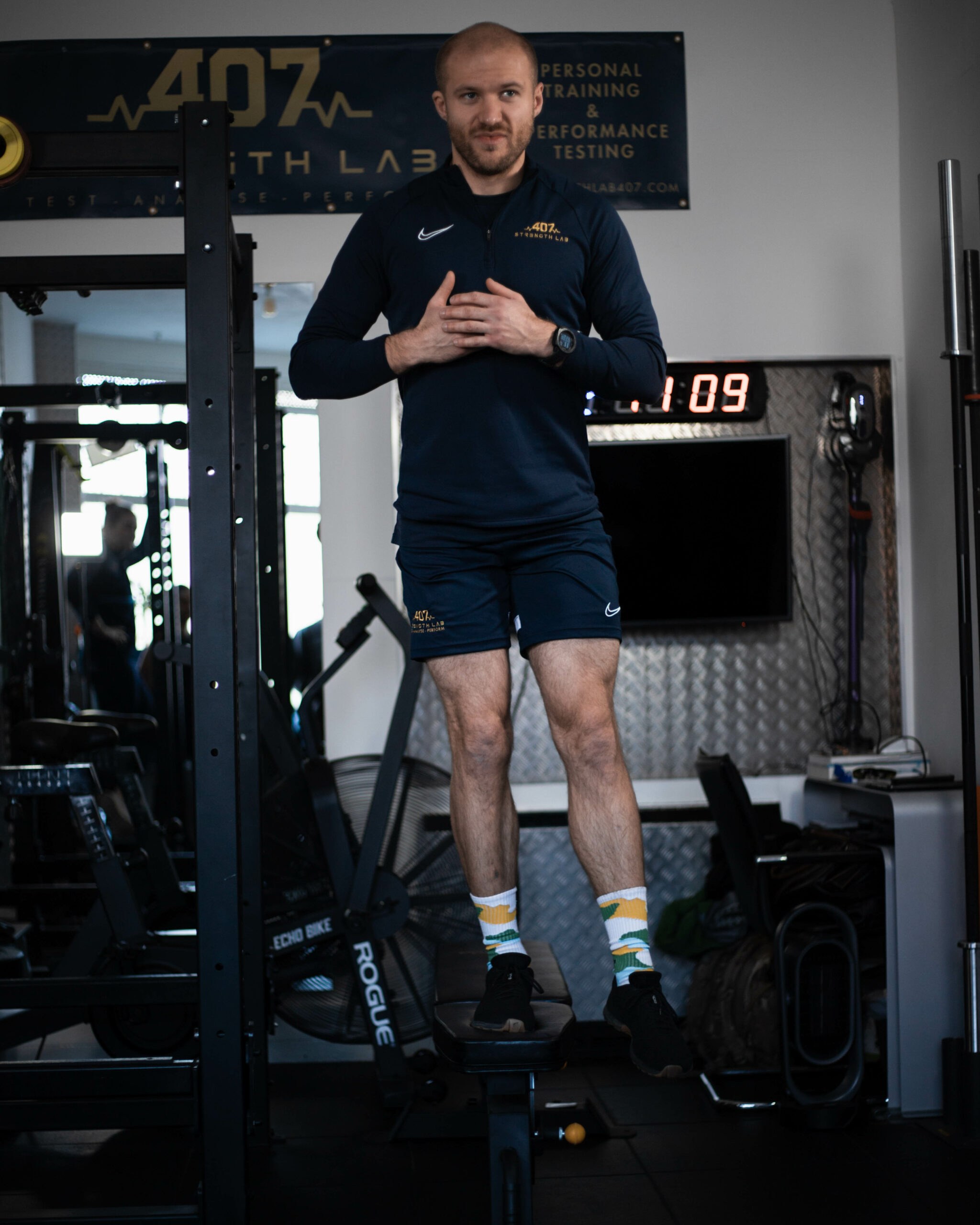
Why strength training matters after knee surgery
After any knee surgery — ACL reconstruction, meniscus repair, knee replacement, or arthroscopy — the muscles around the joint shrink. The quadriceps in particular can lose 20 to 30% of their cross-sectional area within weeks of surgery, even with early physio.
Without structured loading, that muscle doesn’t come back on its own. The result is a knee that feels weak, unstable, and prone to re-injury. Strength training is the only intervention that restores full muscle and joint capacity.
The question isn’t whether to strength train after knee surgery — it’s when and how.
The four stages of post-surgery rehab
Stage 1: Early recovery (weeks 0 to 6)
Managed by your surgeon and physiotherapist. Focus is on swelling reduction, range of motion, gentle isometric activation, and protected weight bearing. No loaded strength work yet.
Stage 2: Foundation (weeks 6 to 12)
This is where strength and conditioning begins. Bodyweight squats, glute bridges, step-ups, hamstring curls, controlled lunges. Loading is gradual — building tissue tolerance before adding heavier weight.
This is the stage where most of Strength Lab LDN’s Knee Injury Rehabilitation clients start with us. We work alongside your physio rather than replacing them.
Stage 3: Strength (months 3 to 6)
Loaded compound movements — back squat, front squat, deadlift variations, single leg work. Programming follows progressive overload principles: small load increases each week, tracked carefully, with technique reviewed every session.
This stage is critical. Skipping it is the most common reason people end up with a “weak knee” two years post-surgery.
Stage 4: Performance and return to activity (months 6 to 12)
Power, plyometrics, sport-specific drills, change of direction work. The goal is full restoration of athletic capacity — running, jumping, cutting, and rotational movements.
For non-athletes, this stage looks more like robust everyday function: stairs without thinking, running for the bus, carrying shopping, playing with kids without flare-ups.
When can I start strength training after ACL surgery?
Most ACL reconstruction patients can begin loaded strength training around 6 to 12 weeks post-surgery, depending on graft type (patellar tendon, hamstring, or quadriceps) and surgeon protocol.
Typical timeline:
- Weeks 0-6: Physio-led — range of motion, swelling control, quadriceps activation
- Weeks 6-12: Bodyweight and machine-based strength, light loading
- Months 3-6: Loaded barbell work — squats, deadlifts, single leg progressions
- Months 6-9: Plyometrics, sprint mechanics, change of direction
- Months 9-12: Sport-specific return to play testing
Strength Lab LDN has worked with clients pre and post ACL surgery, including double ACL and hamstring grafts.
Physio vs S&C coach: which do I need?
Both — and the handover matters.
A physiotherapist manages the early medical stages: post-op care, swelling, range of motion, gait re-training, clearance for loaded exercise. They are the right person for stage 1 of rehab.
A strength and conditioning coach takes over from stage 2 onward. S&C is a different discipline — focused on building strength, power, and movement capacity rather than treating tissue. Coaches at Strength Lab LDN are not physios. We don’t do manual therapy or diagnosis. We do rebuild knees that are ready to be loaded.
The best outcomes happen when both work together — physio for the first 6-12 weeks, then S&C from month 3 onward, often with continued physio touchpoints.
What knee conditions can S&C help with?
The Strength Lab LDN Knee Injury Rehabilitation programme is designed for:
- Pre and post ACL surgery (including double ACL and hamstring grafts)
- Patella tendinopathy (“jumper’s knee”)
- Osgood-Schlatter disease in youth
- Knee pain from aging or hormonal changes
- Knee osteoarthritis
- Old sports injuries that never fully resolved
- Running injuries — runner’s knee, ITB syndrome
- Post-surgical rehabilitation (meniscus, cartilage, knee replacement)
The Strength Lab LDN knee rehab programme
Our knee rehab programme is led by S&C practitioners and includes:
- Initial S&C assessment — movement screen, strength testing, history review
- One-month tailored programme — progressive loading specific to your stage and condition
- Final consultation and assessment — measure progress and plan the next phase
Price: £140 — available in-person at Wimbledon Park or Battersea Park, online, or hybrid format.
Common myths about strength training after knee surgery
“Squats are bad for my knee”
Not true. Properly loaded squats are one of the most effective rehab exercises for the knee. They build the quadriceps, glutes, and hip stabilisers — exactly the muscles that protect the knee long-term. The myth comes from poorly executed squats with bad technique or excessive load.
“I should wait until the pain goes away before training”
For chronic knee conditions like patella tendinopathy, waiting often makes things worse. The tissue needs progressive load to rebuild capacity. Pain monitoring (not pain avoidance) is the standard modern approach.
“Heavy weights will damage my knee”
Heavy weights, programmed correctly, build resilience. The damage comes from heavy weights done with poor technique, no warm-up, or load increases that outpace tissue adaptation. Qualified programming prevents this.
Booking knee injury rehabilitation
Strength Lab LDN runs knee rehab from both locations:
- Wimbledon Park — 407 Durnsford Rd, SW19 8EE
- Battersea Park — 189 Battersea Park Rd, SW11 4LB
Available in-person, online, or hybrid format. Every programme starts with a full assessment.