
Short answer: A knee that gives way needs checking first, because it can be a sign of ligament or cartilage damage. Once you know what’s going on, strength-based rehab for the thigh, hip and balance is how most people get a stable knee and their confidence back. Strength Lab LDN runs knee rehab at Battersea Park (SW11) and Wimbledon Park (SW19). It costs £140 for an assessment, a one-month programme and a review.
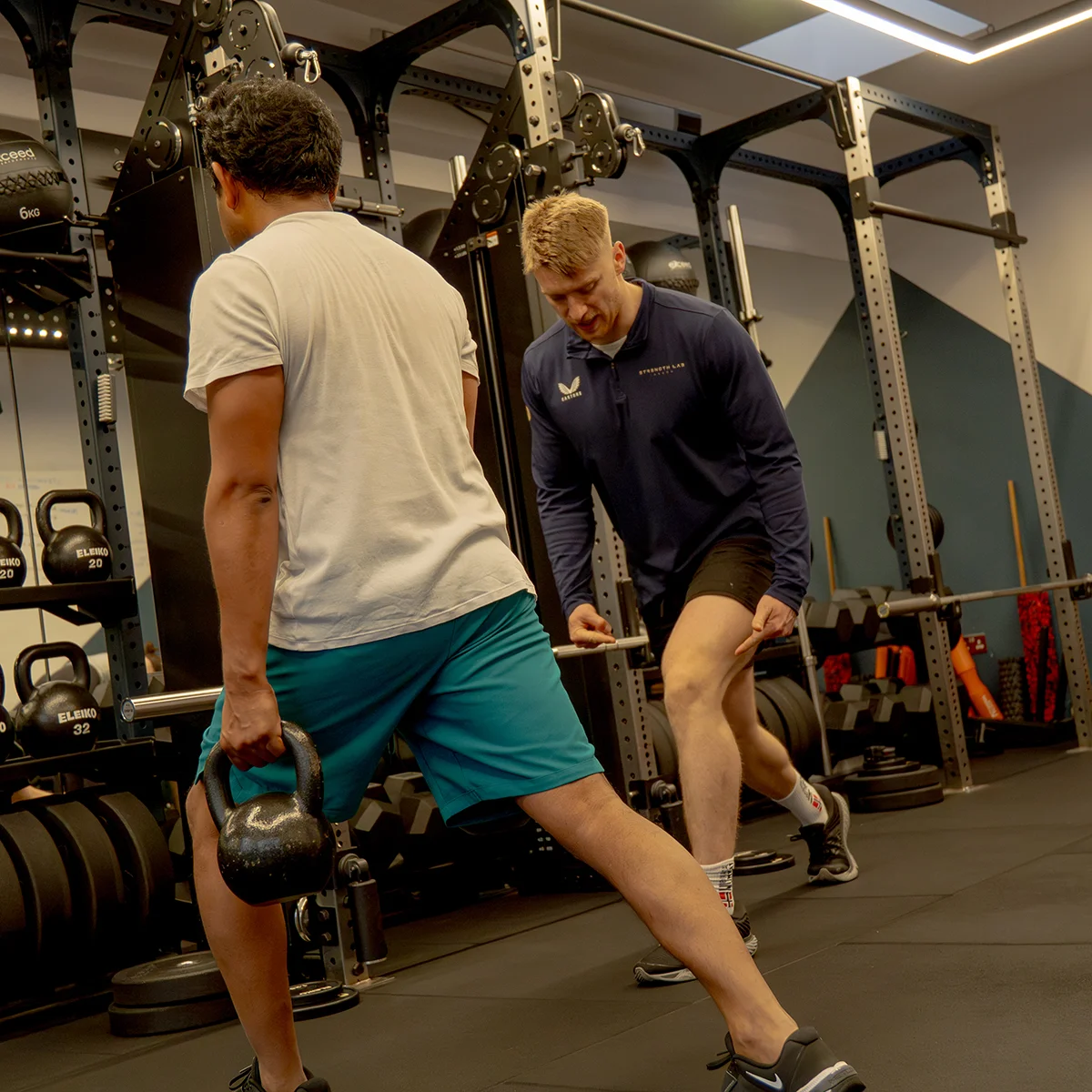
Why does my knee give way?
A knee usually feels unstable for one of a few reasons. Only a doctor or physio can tell you which, but it helps to know the common ones:
- A ligament injury. An ACL tear is the classic one, often after a twist in sport. More in our guide to ACL tears.
- A meniscus tear. Often comes with catching or locking. See meniscus tear recovery.
- Kneecap instability. The kneecap slips out of its groove, sometimes after a knock or with a history of it.
- Weak thigh muscles. After an injury or surgery, the quads can switch off, and the knee buckles even when the joint itself is fine.
When to get it checked first
The NHS advice on knee pain is to get advice from 111 if your knee gives way, locks or painfully clicks. Get it looked at before you start training if:
- it started with a twist, a pop or a fall
- it swelled up soon after
- you can’t fully straighten or bend it
- it locks or catches
- you can’t put weight through it
We’re S&C coaches, not physios or doctors, so we don’t diagnose. Once you’ve been checked, we build the strength around the knee.
How strength training helps an unstable knee
Ligaments hold the joint together, but muscles control it. The stronger and better coordinated the muscles around your knee, the less it relies on the passive structures, and the less it gives way.
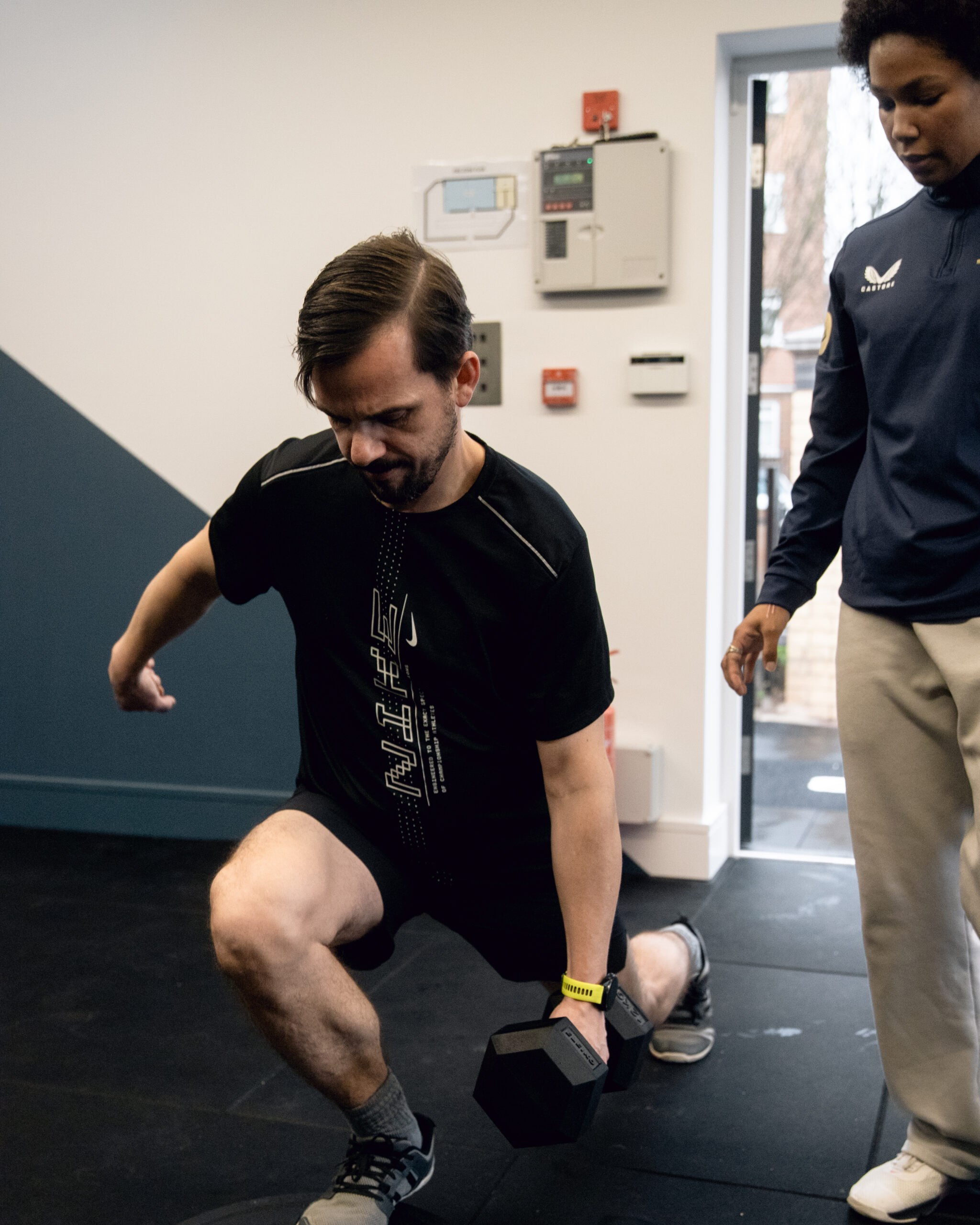
What knee instability rehab looks like with us
1. Assessment
We go through what happened, any diagnosis or scan results and what your physio has done so far. Then we test strength, single-leg control and balance to see where the gaps are.
2. A one-month programme
Your coach builds a programme around the results, in the studio, online or both. It starts with controlled strength work and adds balance and single-leg work as the knee settles.
3. Review
At the end of the month we retest and plan the next step, whether that’s more strength work or a return to sport. If you’ve had an ACL injury, see ACL rehabilitation in Wimbledon.
Where we run knee rehab in London
Battersea Park (SW11)
189 Battersea Park Rd, SW11 4LB
3 minutes from Queenstown Road and 4 from Battersea Park station. More in knee rehab in Battersea.
Wimbledon Park (SW19)
10 minutes from Wimbledon Park tube and Earlsfield station. More in knee rehab in Wimbledon.
Our knee injury rehabilitation programme is £140 at either studio or online. For the bigger picture, read our guide to knee injury rehabilitation in London.
FAQs
Why does my knee keep giving way?
Common causes are a ligament injury such as an ACL tear, a meniscus tear, kneecap instability, or weak thigh muscles after an injury or surgery. A doctor or physio can tell you which one it is.
Should I see a doctor if my knee gives way?
Yes. The NHS advises getting advice from 111 if your knee gives way, locks or painfully clicks. Get it checked before you start rehab, especially if it started with a twist, a pop or swelling.
Can strength training fix an unstable knee?
For many people it’s the main part of getting a stable knee back. Stronger quads, hamstrings and hips, plus balance work, give the joint more control. Some injuries also need surgery, which is why you get it checked first.
Where can I get knee instability rehab in London?
Strength Lab LDN runs strength-based knee rehab at 189 Battersea Park Rd, SW11 4LB and 407 Durnsford Rd, Wimbledon Park, SW19 8EE, and online. It’s led by S&C coaches and works alongside your physio.
How much does knee rehab cost in London?
Our knee rehab programme is £140. That covers an S&C assessment, a one-month programme built for you and a final consultation and reassessment.
Book your assessment
Tell us what’s happening with your knee and we’ll take it from there. Three ways to get in touch:
- Phone: 020 3890 6441
- Email: info@strengthlabldn.com
- Online: contact form
More reading: knee replacement rehab in Wimbledon.